
Could you feed your mealworms better? We thought it was worth finding out...
For years, keeping live mealworms has been wonderfully simple: buy some mealworms, keep them in bran, add the odd slice of carrot and feed them to the birds.
And it works brilliantly.
But at Wiggly Wigglers, we have an annoying habit of asking questions. Usually something along the lines of: could we do this better?
At Lower Blakemere Farm in Herefordshire, we spend a lot of time thinking about nutrition—not just for ourselves, but for our cattle, pigs, crops, soil, compost worms and even the microbes beneath our feet.
Healthy soil grows healthier crops. Healthier crops feed healthier livestock. Everything is connected.
So one day we looked at a tub of live mealworms and thought: why should they be any different?
Mealworms are living creatures. They eat, grow, move and develop before eventually becoming beetles. If we think carefully about nutrition everywhere else on the farm, perhaps we should give mealworms the same consideration.
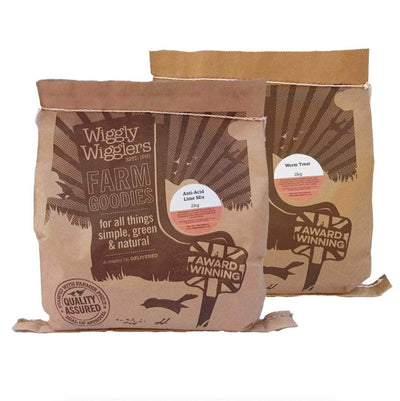
That question led to Wiggly Farm Blend for Live Mealworms.

Bran still works
Let’s be clear: bran is useful, economical and easy to use. Mealworms can burrow through it, live in it and nibble on it. We are not suddenly declaring that everyone has been doing it wrong.
But bran is really doing two jobs: it provides bedding and a basic food source. That is why our familiar Live Mealworm Food is becoming Wiggly Live Mealworm Bedding. It is the same useful product, but the new name describes its main purpose much more clearly.
Farm Blend is different. It has been developed as a more varied feed for people who want to give their live mealworms something beyond a simple bran bedding.
What is in Wiggly Farm Blend?
Our blend contains:
-
rolled wheat
-
rolled barley
-
rolled peas
-
brewer’s yeast
-
limestone flour
Each ingredient has a job. The cereals provide energy, the peas add plant protein, brewer’s yeast contributes useful nutrients and limestone provides calcium.

It is simple, natural and made from ingredients we understand. No unnecessary fuss and no mealworm tasting panel—although they seem to have voted with their feet.
Why does it matter?
When you feed a robin, blackbird or hedgehog a mealworm, you are also feeding it what that mealworm has eaten.
Mealworms are effectively tiny parcels of nutrition. Keeping them active and well fed before they become lunch makes good sense.
That is the thinking behind our motto:
Better Mealworms. Better Birds.
How to keep live mealworms
You do not need an expensive container. A clean ice cream tub works surprisingly well.
Make plenty of small ventilation holes around the upper sides and in the lid. The holes should provide airflow without being large enough for mealworms—or later, beetles—to escape. Keep the tub somewhere cool, dry and out of direct sunlight.

Add a generous layer of Wiggly Farm Blend, tip in the mealworms and give the tub a gentle shake so they settle into it.
Do not add a water bowl. Mealworms get moisture from fresh food. Add a small piece of carrot, potato, apple, courgette or sweet potato every few days. Only add what they can eat before it becomes soft or mouldy, and remove any leftovers promptly.
A gentle stir every few days helps keep the mixture aerated and gives you a chance to check that everything is healthy. It is also oddly satisfying.
Cooler conditions slow the mealworms’ development into beetles, which is helpful when you want to keep them as mealworms for longer. Avoid hot windowsills, greenhouses and damp sheds. Mealworms like comfortable conditions, but they do not need a spa break.
Collecting mealworm frass
As the mealworms eat, you will notice a fine powder gathering at the bottom of the tub. This is mealworm frass, made up largely of their droppings, along with tiny fragments of shed skins and feed.

Do not throw it away. It can be used as a natural soil conditioner in the garden.
Every few weeks, tip the contents of the tub into a sieve and shake gently. The fine frass will fall through, while the mealworms and larger pieces of feed remain in the sieve.
The exact sieve size will depend on the texture of your bedding and blend. You need openings fine enough to retain the mealworms and most of the larger feed, while allowing the powdery frass to pass through. A kitchen sieve can work for small quantities, while a purpose-made mealworm riddle or slotted tray is more convenient for larger batches.
Return the mealworms to their clean tub, top up the Farm Blend and store the collected frass somewhere dry.
You can sprinkle a small amount around houseplants, pots, flowers and vegetables, then water it in. As with most soil amendments, a little and often is more sensible than tipping the entire tub around one unfortunate tomato plant.
A tiny circular economy
This is one of our favourite things about keeping live mealworms:
Vegetable trimmings provide moisture for the mealworms.
The mealworms feed the birds and other wildlife.
The frass feeds the soil.
The soil helps grow more plants.
Very little is wasted.
As regenerative farmers, that makes perfect sense to us. Nature is very good at turning one thing’s leftovers into another thing’s lunch.
Wiggly Farm Blend began with a simple question: could we feed live mealworms better?
We think the answer is yes.
Welcome to Wiggly Farm Blend for Live Mealworms—developed on our regenerative farm in Herefordshire.
Better Mealworms. Better Birds.
Add it to your order here https://www.wigglywigglers.co.uk/products/wiggly-farm-blend-for-live-mealworms