
Let’s get one thing straight from the start:
a bokashi bin isn’t composting.
It’s fermentation.
That distinction matters. Once you understand it, everything else makes sense — why bokashi composting works so well with compost bins, why it feeds soil rather than just filling containers, and why it’s one of the most effective ways to turn food waste into living biology.
⸻
What a bokashi bin actually does

Traditional composting is aerobic. It needs oxygen, balance, turning, time, and the right mix of materials. When it goes wrong, it smells, stalls, or collapses into sludge.
A bokashi bin does something different.
It uses anaerobic fermentation, driven by naturally occurring beneficial microbes — mainly lactic acid bacteria, yeasts, and phototrophic bacteria. These microbes rapidly ferment food waste rather than letting it rot.
The result:
• Food waste is stabilised, not decomposed
• Nutrients are preserved, not lost as gas
• Pathogens are suppressed by acidity
• Odours are controlled by biology, not airflow
Think less “rotting bin” and more sauerkraut for peelings.
That’s why bokashi systems behave so differently from standard compost bins.
View our Range of Bokashi Bins Here
⸻
Why the bran matters (and where ours comes from)

The engine of any bokashi system is the bokashi bran — and quality matters.
We make all our own dried bokashi bran here on the farm, and we’ve been doing so for over 25 years. It’s produced in small batches, properly fermented, carefully dried, and stored to keep the microbial populations stable and active.
That matters because bokashi isn’t about dumping microbes and hoping for the best. It’s about introducing the right biology, in the right condition, so fermentation is predictable, controlled, and effective.
This isn’t theory for us. It’s practice.
⸻
How a bokashi bin improves composting

When fermented bokashi material is added to a compost bin, something important happens.
The microbes have already done the hardest work:
• Proteins are partially broken down
• Sugars are converted into organic acids
• Nitrogen is held in a more stable form
This means:
• Faster composting
• Less ammonia loss
• Fewer flies
• More consistent breakdown
• A calmer, more reliable heap
In soil terms, bokashi acts as a microbial primer.
Instead of throwing raw food waste into a compost bin and hoping for the best, you’re feeding it pre-digested biology — like starting soup with stock rather than cold water.
Try your hand at DIY Composting with our tips here
⸻
Using bokashi compost in soil, wormeries and livestock systems
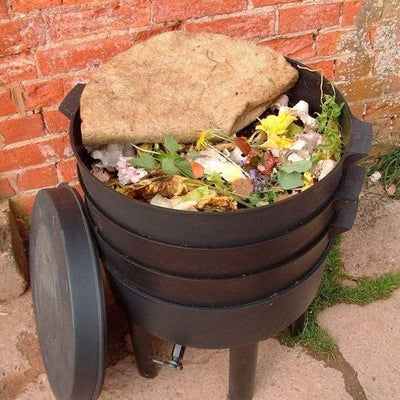
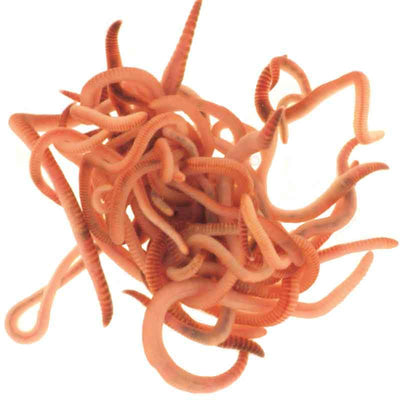
Once bokashi material has had brief contact with soil or compost, worms get involved — enthusiastically.
Because the food has been fermented, it is:
• Softer
• Partially broken down
• Less hostile to soil life
Worms can process it more efficiently than raw scraps, producing casts rich in microbial life and plant-available nutrients.
We also use bokashi bran beyond the kitchen and garden — including in our cowsheds. Added to bedding and manure, it helps stabilise nutrients, improves the composting of manure, and supports a healthier microbial environment for the cattle themselves. Better biology in the shed leads to better manure, better compost, and ultimately better soil.
It’s all one system.
⸻
Bokashi, kombucha and kefir: same logic, different job
If bokashi feels familiar, that’s because it follows the same principles as fermented foods we happily eat:
• Kombucha
• Kefir
• Sauerkraut
• Kimchi
• Live yoghurt
Fermentation:
• Preserves nutrients
• Improves bioavailability
• Suppresses harmful microbes
• Supports healthy biological systems
The soil has a digestive system too.
Plants don’t “eat” fertiliser directly. They rely on microbes to convert nutrients into forms they can access. Bokashi feeds that microbial system.
Fermented food supports gut health in people.
Fermented waste supports soil health in gardens and fields.
Same biology. Different scale.
⸻
Why living soil grows better food
We talk a lot about nutrient-dense vegetables — and rightly so.
But vegetables are only as nutritious as the soil they grow in.
Soils rich in microbial life:
• Improve mineral uptake
• Increase micronutrient density
• Support plant resilience
• Reduce reliance on synthetic inputs
A bokashi bin doesn’t add magic nutrients.
It activates the system that delivers them.
That’s the quiet brilliance of bokashi composting.
It doesn’t replace compost bins, wormeries, or good farming.
It makes them work better.
Not flashy. Not fashionable.
Just solid biology, doing what it’s always done best.