
Quite a lot, as it turns out.
Farmers Guardian recently came to Lower Blakemere Farm to have a look at what we are doing here and, more importantly, why we are changing the way we farm.
They have written a lovely piece called:
And there is also a podcast where we get the chance to explain rather more about what we are up to.
For us, the really interesting bit is that it joins the dots between Lower Blakemere Farm and Wiggly Wigglers.
Because they really are the same story.

It all comes back to the soil
For more than 30 years at Wiggly Wigglers we have been banging on about worms, composting, Bokashi, food waste, birdfood and wildlife.
Sometimes I suspect people thought we had simply developed a rather unhealthy obsession with worms.
But the principle behind all of it is actually very simple:
Don’t waste nutrients. Feed the soil. Encourage biology. Make room for wildlife.
And increasingly that is exactly what we are trying to do across the farm as well.
We are moving away from thinking purely about what we can take from a field and thinking much more about how the whole system works.
What is happening underground?
Are there worms?
Are there living roots?
Can the soil hold water?
Can we recycle more nutrients instead of buying them in?
Can cattle and crops work together?
Can we grow food while leaving the soil in better shape?
We certainly haven’t got all the answers.
Some things work brilliantly. Some don't. Some involve Phil looking at something we have tried and wondering whose idea that was in the first place.
Usually mine.

Regenerative farming without the fancy bits
“Regenerative farming” can sound terribly grand.
In reality, on our farm, it looks much more like:
Worms.
Roots.
Cattle.
Cover crops.
Manure.
Compost.
Bokashi.
Keeping the soil covered.
Reducing cultivations.
Recycling nutrients.
Watching what happens.
Getting things wrong.
And trying again.
That is why what happens at Lower Blakemere matters to Wiggly Wigglers.
We aren't simply selling composters because composting happens to be fashionable.
We use these principles ourselves.
We use Bokashi biology in our livestock bedding and manure. We make composts and biological brews. We are working to increase organic matter and soil life. We are looking at how grazing, roots and biology can help our soils become more resilient.
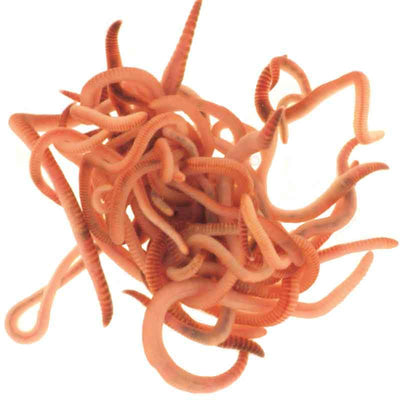
And of course we remain extremely interested in worms.

The same thing works in your garden
You don't need 850 acres and a herd of cattle to make a difference.
In fact, one of my favourite soil facts is this:
There can be more microorganisms in a single teaspoon of healthy soil than there are people on the planet.
Just think about that for a minute.
That handful of dark, crumbly soil or homemade compost isn't just stuff for plants to grow in. It is a whole living world of bacteria, fungi, protozoa and other organisms quietly cycling nutrients and helping make soil work.
And that, for me, is one of the best reasons to make compost.
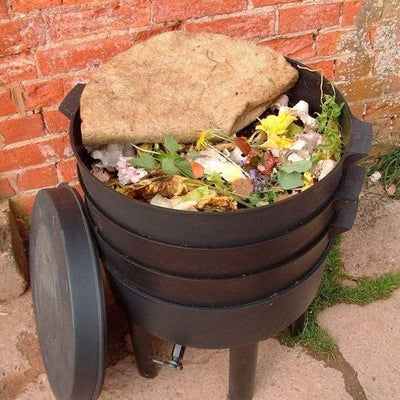
A wormery in a tiny garden is doing exactly the same thing on a different scale.
Kitchen scraps go in.
Worms and microbes get to work.
Nutrients are recycled.
Organic matter goes back into the soil.
Likewise with Bokashi. Instead of putting food waste in the bin and sending those nutrients away, you ferment it and put them back to work.
So every bucket of compost, every tray of worm casts and every bit of organic matter we return to our gardens is helping to feed that extraordinary life beneath our feet.
And when you feed the birds, grow flowers, leave seedheads standing or make space for insects, you are adding another piece to the same puzzle.
That is the bit that excites me most.
You can start where you are.
A balcony.
A back garden.
A school.
An allotment.
A smallholding.
Or a farm.
Make compost. Feed your soil. Waste less. Feed the birds. Grow more roots. And notice what turns up.
Have we cracked regenerative farming?
Absolutely not.
But we are asking better questions than we used to.
And we are learning that many of the things Wiggly Wigglers has been talking about for years — worms, microbes, compost, biodiversity and cycling nutrients — matter just as much in a 20-acre field as they do in a garden compost bin.
That is why we were so pleased Farmers Guardian came to tell part of the story.
Read the Farmers Guardian article here →

And if you fancy hearing more of the story — including rather more of us explaining what we are trying to do — you can watch/listen to the podcast here:
Thank you to Farmers Guardian for taking the time to come to Lower Blakemere and understand what we are trying to achieve.
We are still learning.
Still experimenting.
And still completely convinced that worms are a lot more important than most people realise.