How to use Woolch around plants
No cutting, measuring out scoops or mixing required. Just pull off what you need.
- Remove any weeds and water the soil or compost if it is dry.
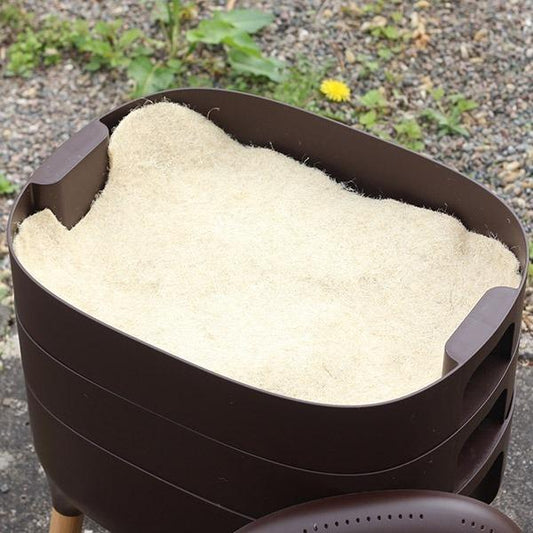
- Tease the wool into overlapping pieces and lay them over the exposed surface.
- Aim for a settled layer around 5cm deep, where space allows.
- Leave a clear gap around stems, trunks and plant crowns.
- Water lightly to help settle it, then check the compost underneath when deciding whether your plants need watering.
Use around established shrubs in patio pots, fruit bushes, young trees or a small patch of border.
Woolch helps retain moisture, but plants still need watering. Avoid covering emerging shoots or packing wool against stems.
Wiggly tip: start with a couple of outdoor pots and see how it works for you before tackling the whole garden.
A little wool science
Wool is made mainly from keratin, a tough natural protein. That toughness is why it breaks down gradually rather than disappearing after a few showers.
Soil bacteria and fungi slowly break the fibres into smaller compounds. As decomposition continues, nitrogen in the wool is converted into forms plant roots can take up.
Nitrogen supports leafy growth, while wool also contains sulphur, another nutrient plants use to make proteins. These nutrients become available gradually; they aren’t all released as soon as you put the fleece down.
As the wool decomposes, its organic material becomes part of the soil’s recycling system, providing a food source for decomposer organisms.
Think of Woolch as a useful soil covering with a gradual nutrient contribution, rather than a complete plant feed. Plants in pots may still need their usual balanced fertiliser.
How long will it last?
Wool is slow to break down. Expect it to last through a growing season, with some fibres remaining longer.
Its lifespan depends on the thickness of the layer, moisture, temperature and contact with the soil. Warm, damp conditions generally encourage faster decomposition; dry conditions slow it down.
Check occasionally and top up when the covering becomes thin or gaps appear. There’s no need to remove decomposing wool before adding fresh material.
What about slugs and snails?
Some gardeners use raw wool rings around vulnerable plants to try to discourage slugs and snails.
You can try this with Woolch, but we wouldn’t promise slug-proof plants: wool barriers are not consistently effective. Keep checking tender growth and use other protection where needed.
Help birds build their nests — from January
Birds naturally collect wool caught on fences and hedges. Your included cage gives them another place to find small tufts for lining their nests.
Keep a little fresh, unused wool aside before mulching your pots.
- From January, tease the wool into small, loose tufts.
- Put a little into the cage, leaving it easy for birds to pull out. Don’t cram it full.
- Hang securely in a sheltered spot near shrubs or trees, away from places cats can easily reach.
- Check regularly, replenish as needed and replace wool that becomes dirty or sodden.
January gets the material in place for early nest-builders. You may see more collecting as spring approaches, and you can continue offering it through July.
Wool provides a soft, insulating lining that can help keep eggs and chicks warm. Let birds choose what they need and carry it away themselves.
Don’t put wool directly into nest boxes. Offer loose natural tufts, without string, yarn or plastic netting.