
(From me – because healthy food starts with living soil.)
We talk a lot about food – how to grow it, shop for it, and eat it better. But if we’re serious about a food revolution, it has to start under our feet. Soil is the foundation of food, farming, and life itself.
It’s not just dirt – it’s a living, breathing ecosystem. One teaspoon of healthy soil can hold more microorganisms than there are people on Earth. These microbes work with worms, fungi, and roots to store carbon, cycle nutrients, filter water, and grow nutrient-dense food.
And here’s the truth: we’ve treated soil like a dead medium for far too long. Chemical fertilisers, heavy cultivation, and hauling away organic waste have all broken the carbon cycle. Regenerative farming teaches us the opposite – feed the soil and it feeds everything else. Whether you’re running a farm or a small garden, you can do your bit.
1. Composting Made Easy – and Worth Celebrating
If you can make a cup of tea, you can compost.
Mix your greens (food, weeds, grass) with your browns (leaves, straw, cardboard), add air and moisture, and let nature do the work.
Leave some leaves or grass clippings where they fall – that’s mobile composting. You’ve created mulch that feeds worms, locks up carbon, and boosts soil organic matter.
And that matters: for every 1% increase in soil organic matter, the soil can hold up to 20,000 litres more water per hectare. That’s resilience – against drought, flood, and the madness of the weather.
The result? Healthier soil, stronger plants, and less watering – nature’s own recycling system, working quietly while you get on with your day.
2. Compost = Carbon in the Right Place
When waste goes to landfill, it breaks down without oxygen and releases methane – about 25 times more powerful than CO₂ (WRAP, 2022).
Composting flips that: it keeps carbon in the soil, feeding microbes, worms, and roots. It’s the same carbon cycle our cows rely on – grass grows, cows eat, dung feeds the microbes, and carbon goes back into the soil.
Healthy soil stores carbon, grows nutrient-dense food, holds water like a sponge, and saves you buying fertiliser or bagged compost that’s travelled halfway round the country.
On farms, regenerative systems that increase soil organic matter by just 0.1% per year can offset huge amounts of emissions and improve profitability. In gardens, it means tastier veg, stronger roots, and less waste.
3. Use What You’ve Got – Your Own Garden & Kitchen Waste
Don’t ship your waste off for someone else to “recycle” – it’s a resource, not rubbish. Transporting it burns fuel and wastes the nutrients your garden needs.

When you compost your own kitchen and garden waste, you keep the carbon, nitrogen, and microbes cycling right where they belong – in your soil. That’s regenerative thinking at any scale.
Every peel, leaf, and teabag is part of the solution. You’re closing the loop, not adding to landfill. That’s the circular economy in its simplest, most powerful form – right on your doorstep.
4. Bokashi: The Secret Weapon
Bokashi fermentation is a quiet revolution in itself. It ferments food waste (yes, even meat and dairy) instead of letting it rot, keeping carbon locked in and methane out.
Add that fermented material to your compost heap or bury it in a raised bed, and you turbocharge life underground – microbes, fungi, and worms multiply fast.
Trials show Bokashi-treated waste loses as little as 3% of its carbon, compared with 60% from ordinary composting (Farmers Weekly, 2023).

And here’s a top trick: when you mix it in, add a spade of soil from under a hedge. That soil’s teeming with wild microbes and fungi that’ll kick-start decomposition and diversity. It’s like adding a spoonful of sourdough starter to your compost.
This is the same principle we use on regenerative farms: inoculate the soil with biology, not chemicals. Feed it life, and it will repay you in abundance.
Get started with Bokashi here https://www.wigglywigglers.co.uk/collections/complete-bokashi-systems-from-kitchen-waste-to-living-soil
5. Worms Make Black Gold
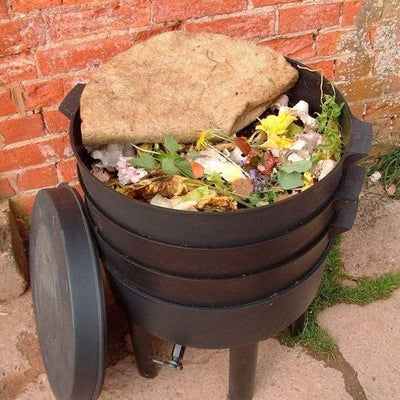
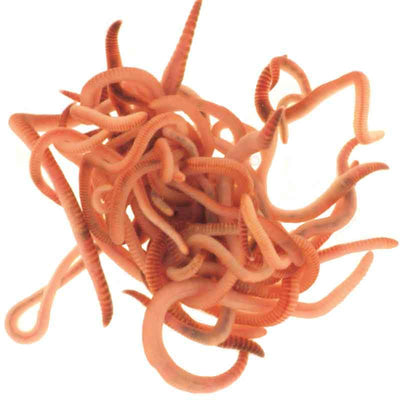
Add composting worms – or use a wormery or in-ground wormery – and you’ll see the real magic happen. They turn waste into casts that are 5× richer in nitrogen, 7× in phosphorus, and 11× in potassium than ordinary soil (RHS Report).

They aerate, balance moisture, and make nutrients plant-ready. Worms are nature’s recyclers, quietly working full-time under your feet.
And that living compost makes brilliant compost tea – a microbial brew that feeds plants, suppresses disease, and boosts growth naturally.
Healthy compost = living soil. And living soil = nutrient-dense food.
It’s the simplest, most direct link between your kitchen, your garden, and your health.
The Bottom Line
If you use your own garden and kitchen waste, add a spade of soil from under the hedge, and feed your compost with life – you’re already part of the soil revolution.
Living compost makes living soil. Living soil grows better crops, holds more carbon, supports more wildlife, and produces food that’s richer in nutrients.
So whether you farm acres or grow in a few pots, this is your revolution too.
Start with your waste, and end with soil that gives back more than it takes.
Healthy soil = healthy food = healthy people = healthy planet.
And that, in a nutshell, is how we feed the world – from the ground up.